
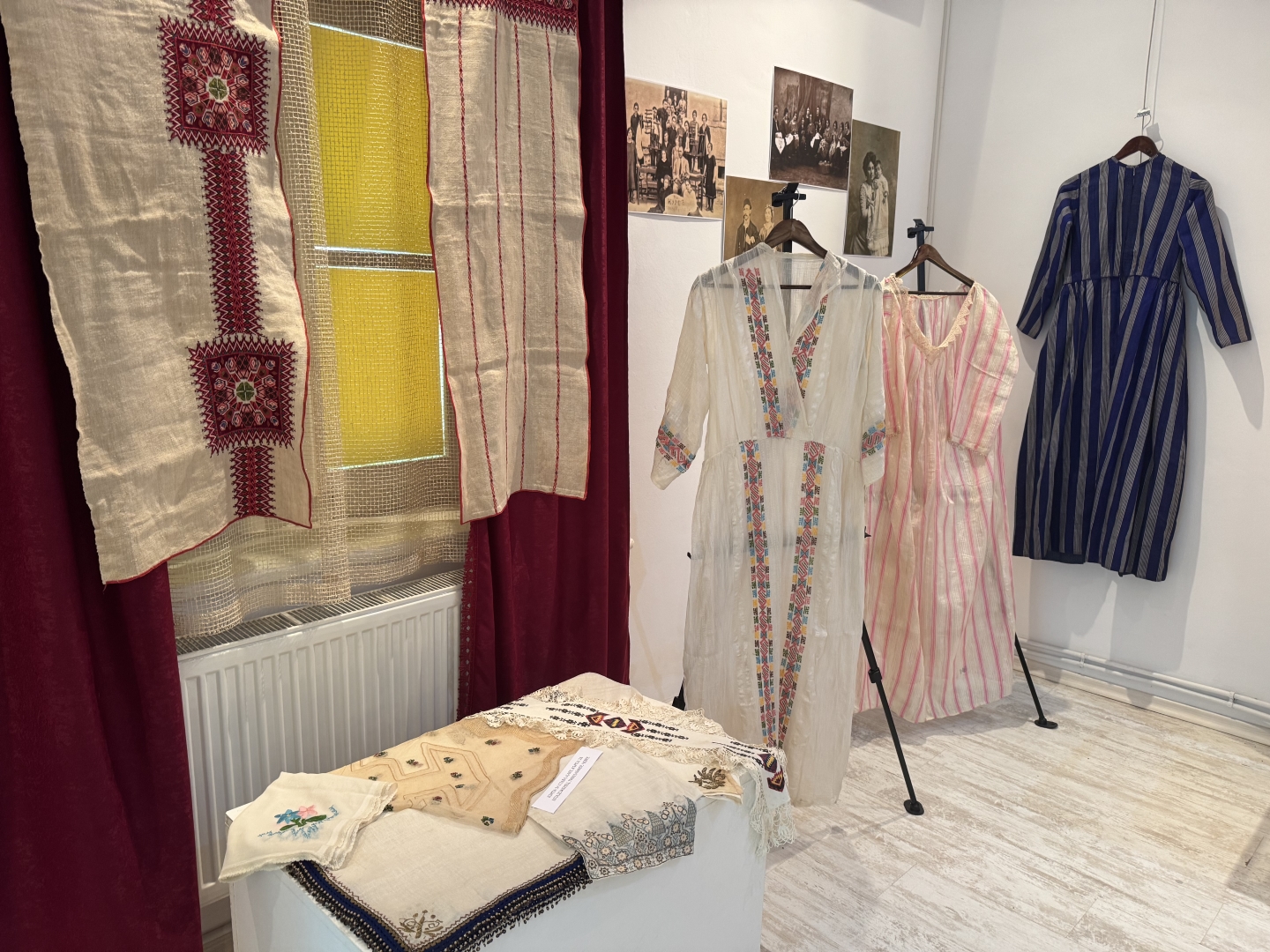
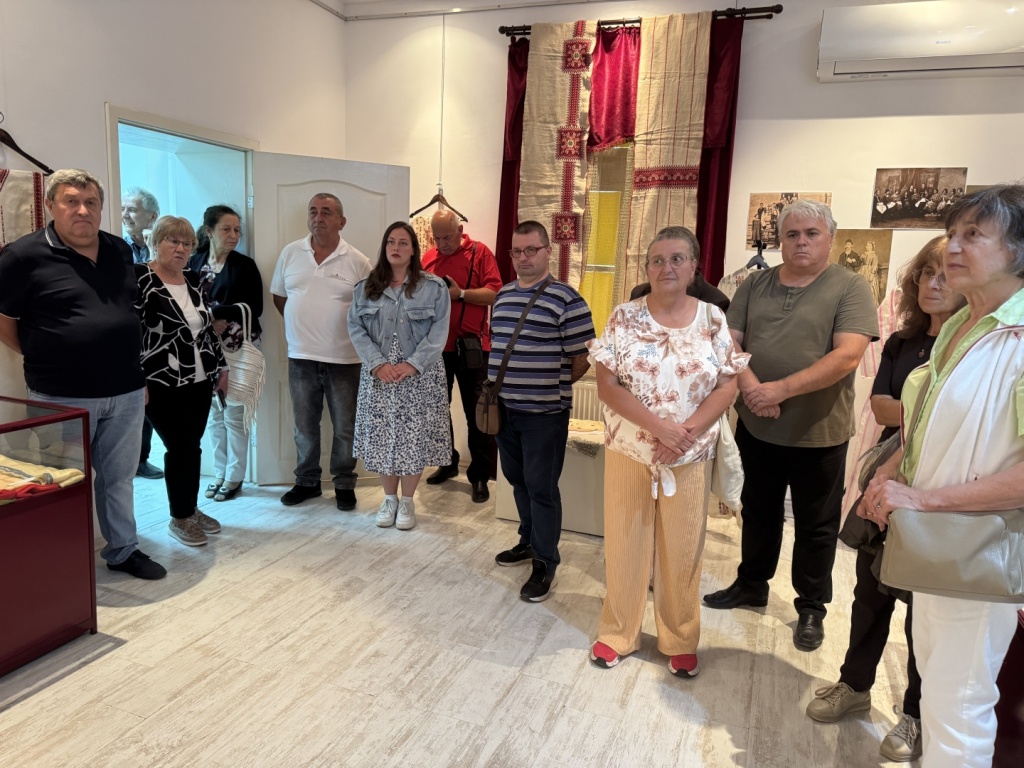
On September 14, the traveling exhibition “Nine Loads of Silk and Another Nine of Embroidered Goods”—organized by the Regional Historical Museum of Haskovo—opened at the Ananie Yavashov House-Museum in Razgrad. The event was attended by museum professionals, representatives of cultural institutions, and admirers of the art of embroidery. The exhibition was presented in detail by Prof. Dr. Rositsa Angelova, Head of the Modern and Contemporary History Department at the Regional Historical Museum in Razgrad. She shared a number of interesting facts regarding the development of sericulture and the Silk Road. The exhibition’s curator is Mihail Marinov, a designer at the Razgrad museum.
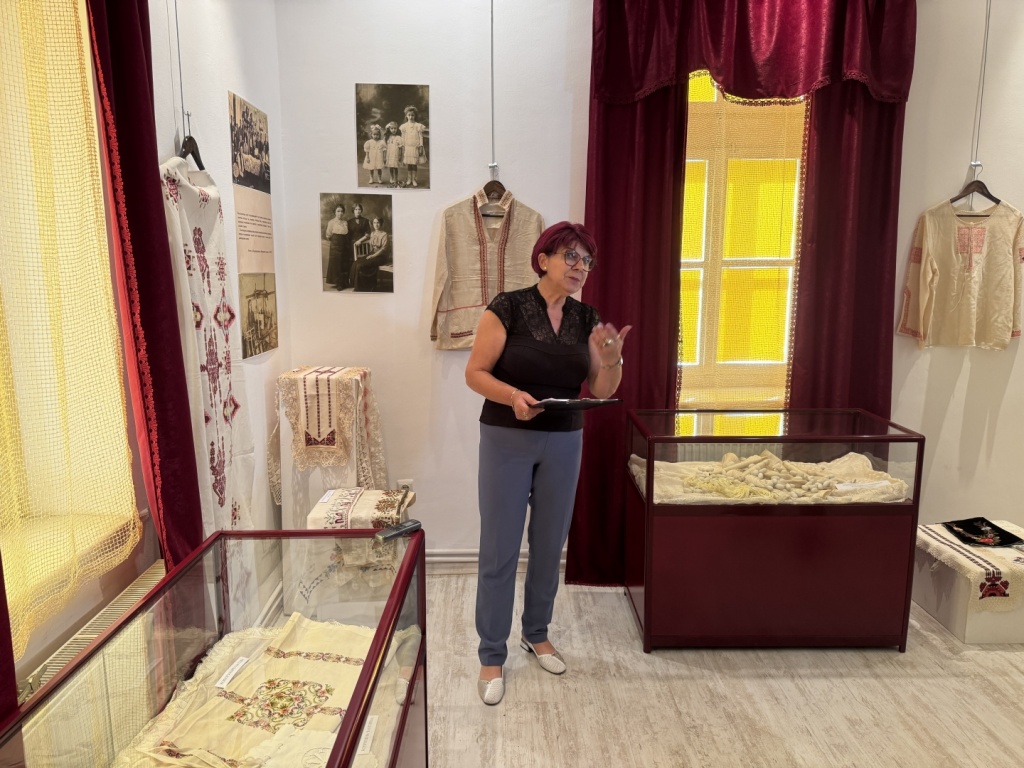
Silkworm rearing, silk production, and weaving are the stages leading up to the embroidery of the fine household items and garments featured in the exhibition—such as shirts, tablecloths, bedsheets, vests, and shawls. Sericulture—and consequently silk production—was particularly well-developed in the Haskovo region, a fact evident from the items in the visiting exhibition. Photographs and accompanying texts recall how young women and brides displayed true artistic talent using the noble silk thread to embellish their outerwear and undergarments in a variety of ways.
Silkworm rearing and silk production provided a source of income for families, while skilled craftswomen transformed the embroidery on the finished items into true art. Table runners, headscarves, and groom’s kerchiefs are among the pieces richly adorned with embroidery. Notably, symmetry and geometry play a key role in the artistry of these items—principles that were perfectly applied during their creation in the late 19th and early 20th centuries, the period from which the exhibited pieces originate. The embroidery is often combined with lace, which also features on bedspreads.
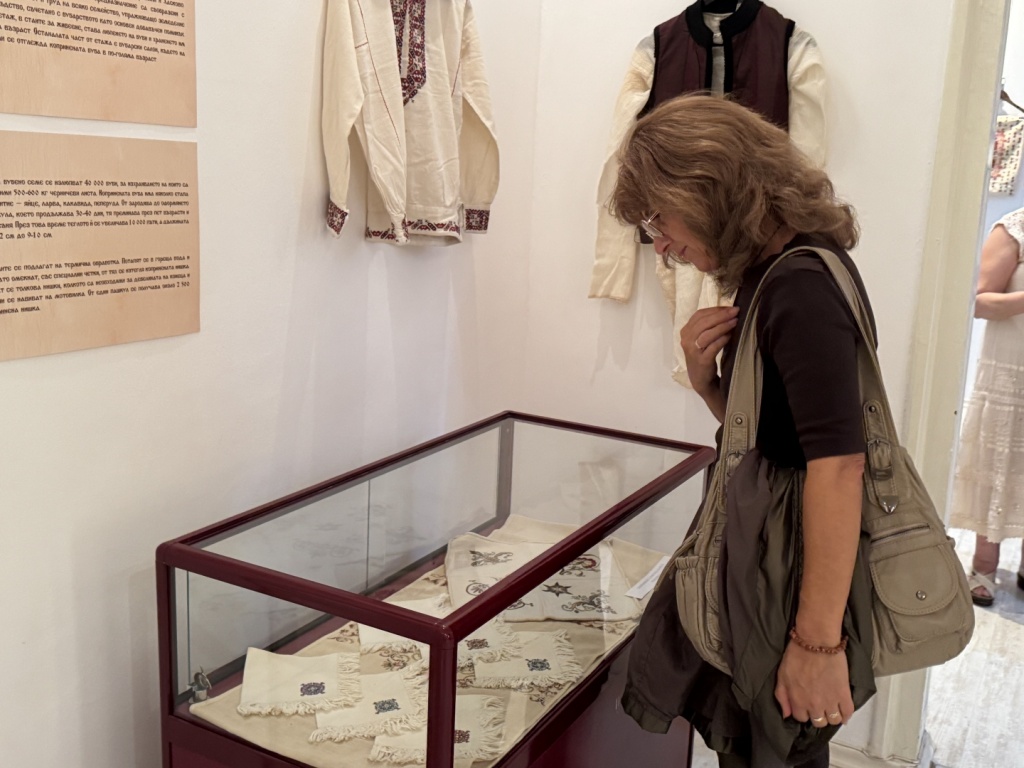
The exhibition also features silk cocoons and natural silk threads; many visitors paused to look at them, recalling the early 1970s when silkworm rearing was part of the lives of many families in Razgrad. They had mastered the intricacies of feeding the silkworms mulberry leaves, sorting the cocoons by quality, and the other stages of sericulture.
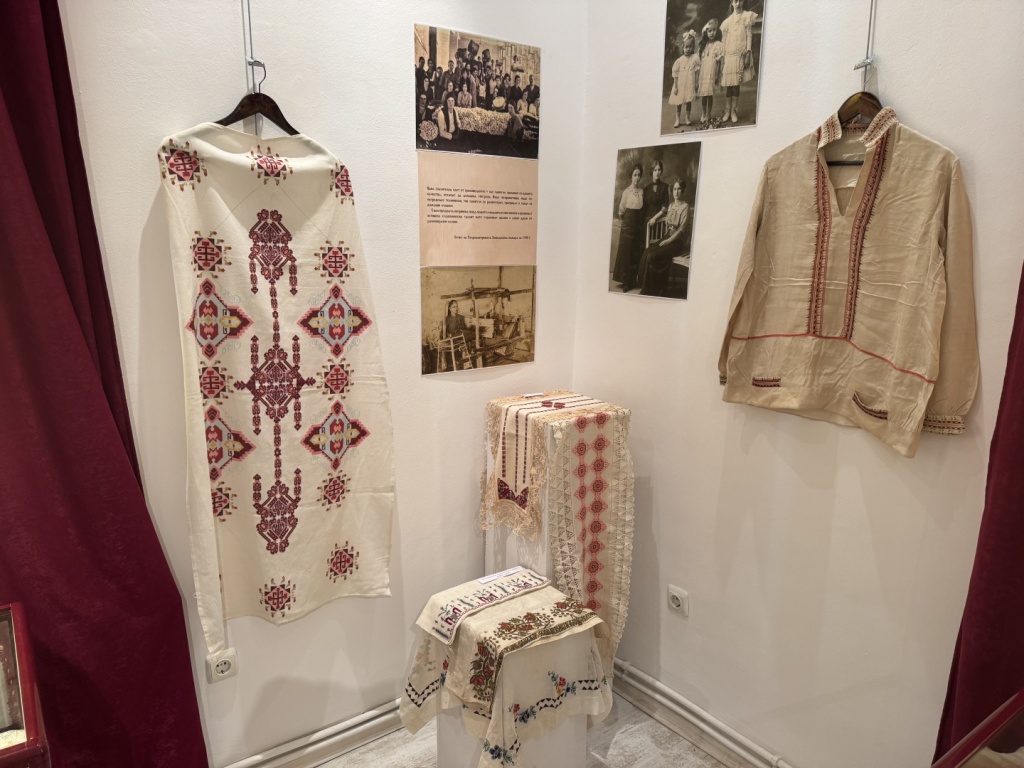
There are 128 movable cultural assets in the exhibition, and they will remain at the Ananie Yavashov House-Museum until October 26.

