
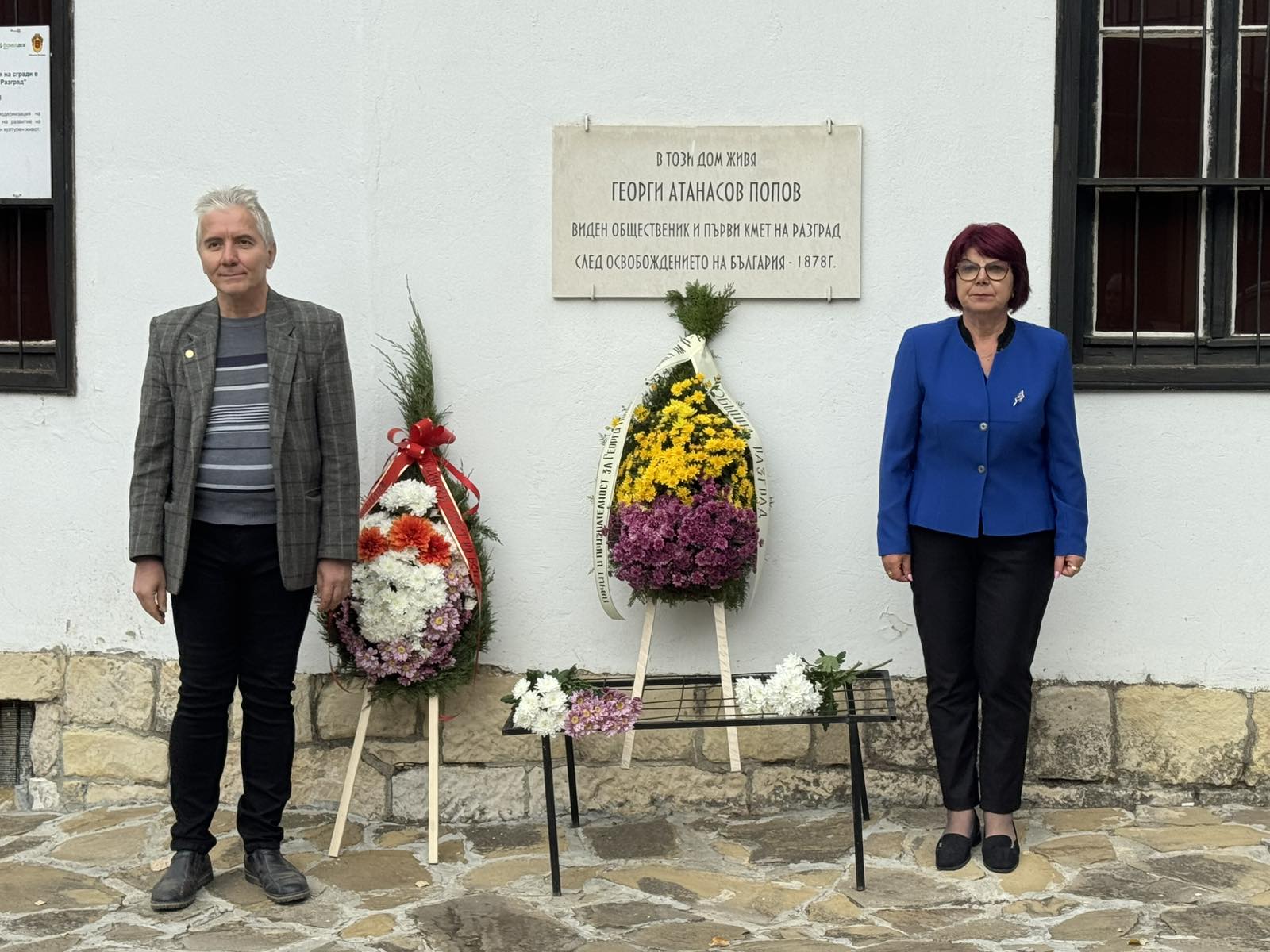
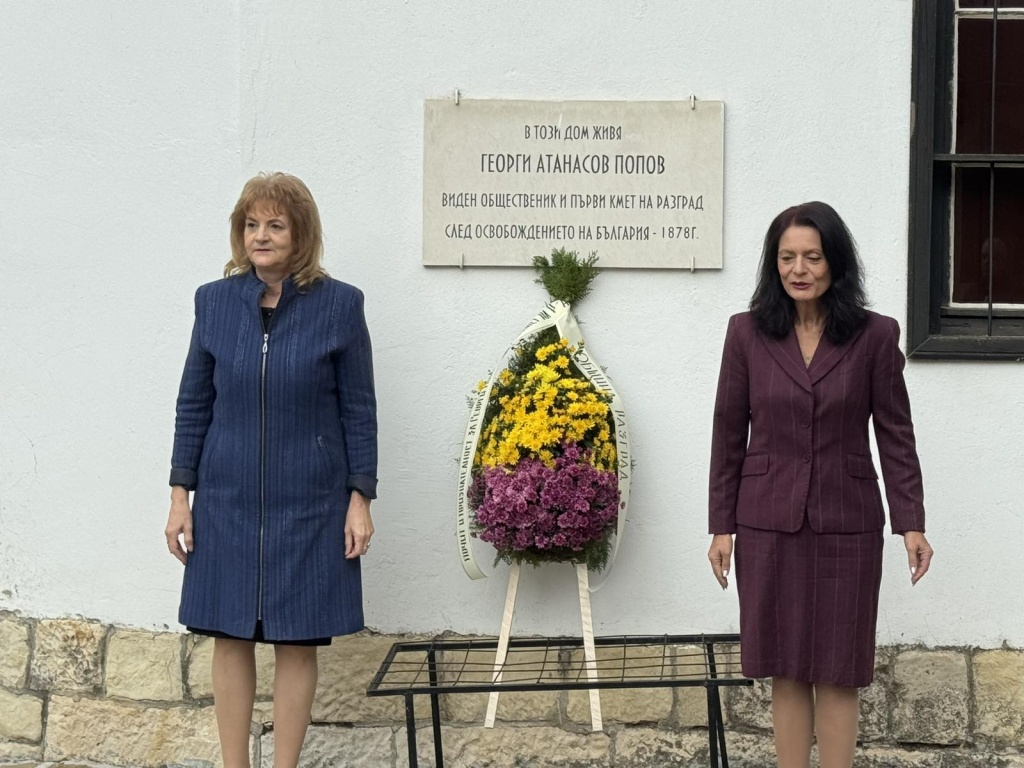
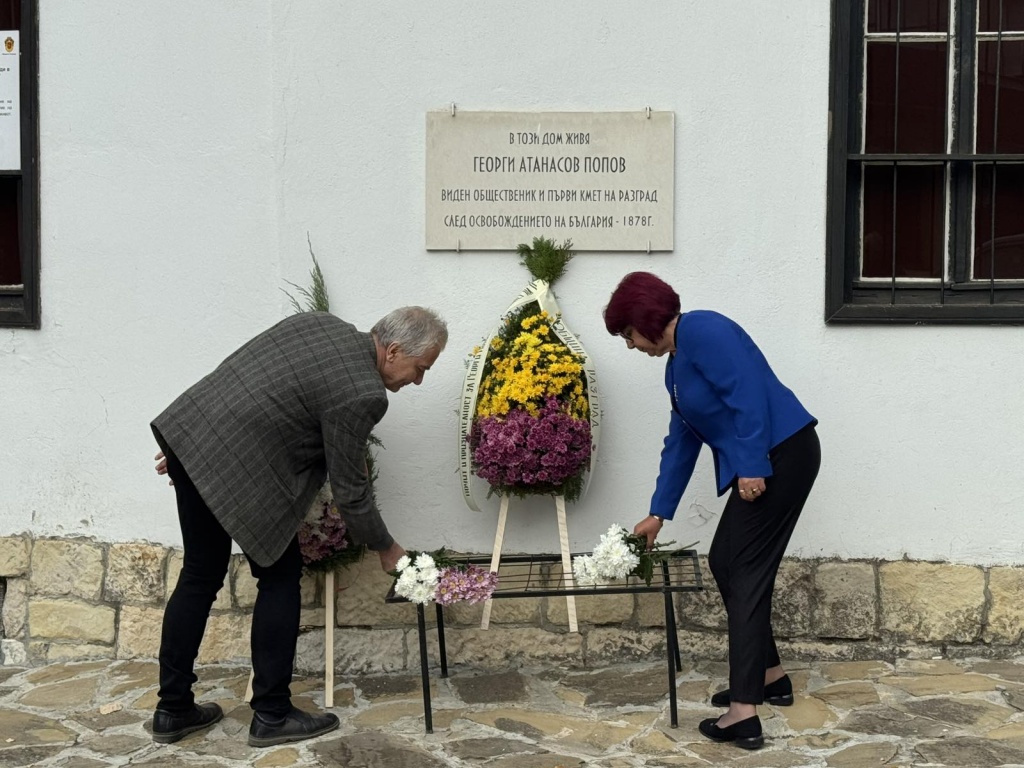
October 12—the Day of the Bulgarian Municipality and Local Self-Government—was marked in Razgrad, with the Regional History Museum participating in the commemoration for the fourth consecutive year. Traditionally, the ceremony took place in front of the memorial plaque dedicated to Georgi Popov (1833–1917), Razgrad’s first mayor; the plaque is mounted on the facade of the Ethnographic Museum—the house where he once lived.
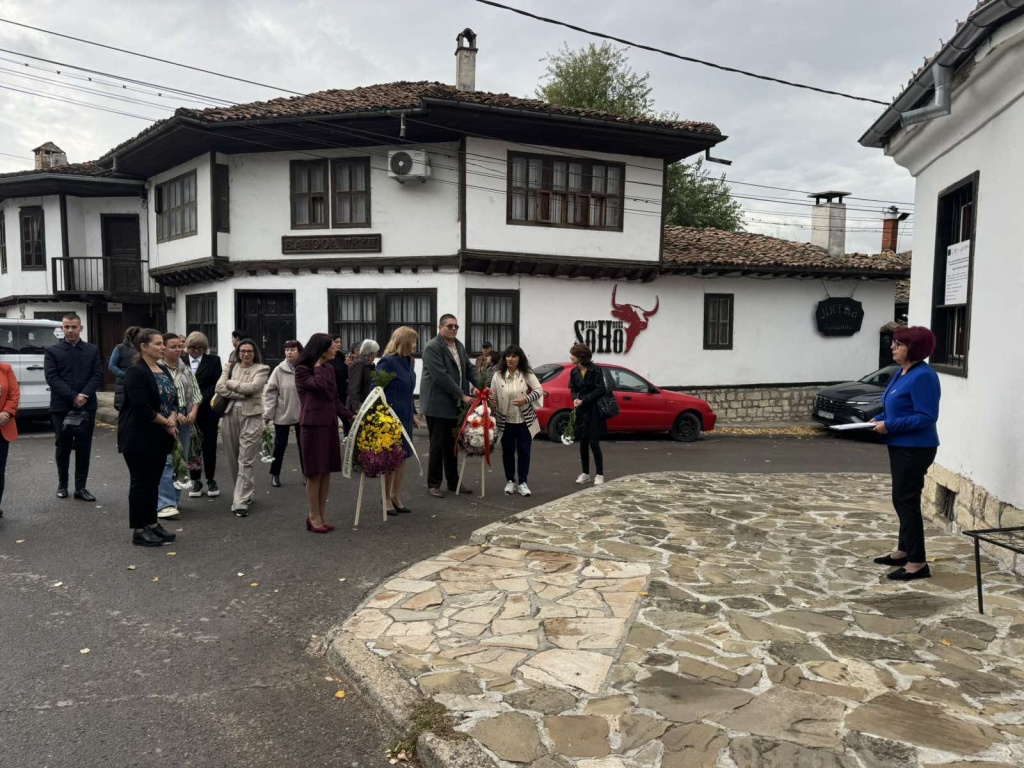
A group of representatives from the Regional History Museum in Razgrad, Deputy Mayor Elka Nedelcheva, Municipal Council Chair Galina Georgieva, municipal officials, representatives of political parties, and members of the public attended the ceremony to pay tribute to the work of Georgi Popov.
Prof. Rositsa Angelova PhD, Head of the Modern and Contemporary History Department at the Regional History Museum in Razgrad, delivered an address marking the Day of the Bulgarian Municipality. Prof. Angelova PhD highlighted the significant contribution of Georgi Popov to the city’s development. She provided a comprehensive overview of the municipality’s evolution as an administrative unit, tracing its history back to 1878, when Georgi Popov was elected Mayor of Razgrad. In January 1878, the Russian commandant, Prince Vladimir Vasilyevich, convened the local citizenry to elect a City Council. The council comprised eight respected local figures, led by the merchant and public figure Georgi Atanasov Popov—an innovator who transformed local trade along European lines, a spirited Bulgarian who had proven his devotion during the Crimean War, the initiator behind the construction of the new St. Nicholas the Wonderworker Church, and a staunch defender of Bulgarian interests before the Ottoman authorities.
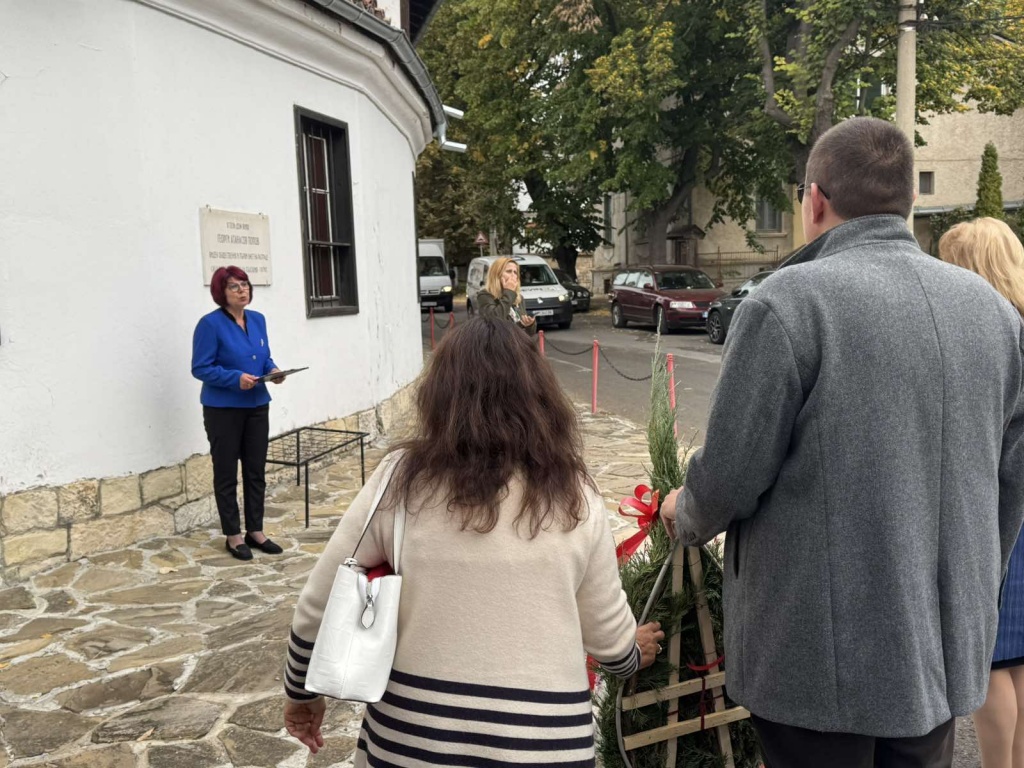
Prof. Angelova recalled that when Popov took over the administration of Razgrad, the city lacked a budget and established roads, as well as modern healthcare and an organized educational system. The first municipal council brought order to taxation, initiated sanitation efforts, and outlined the initial contours of a modern urban plan. She also noted that a form of organized community resembling a municipality—specifically church and school boards—had existed in earlier centuries; these bodies paid teachers, purchased books, maintained community centers, and upheld the Orthodox faith.
“The challenges of our time differ from those of 1878, yet the formula for success remains unchanged: reason, will, and unity”, stated Prof. Angelova. She is the creator of the exhibition dedicated to the life and work of Georgi Popov, which the residents of Razgrad first had the opportunity to view in 2023—also during the observance of Bulgarian Municipality Day. Regarded as a founding figure of local governance, Georgi Popov served not only as the first mayor of Razgrad but also as a representative in both the Constituent Assembly and the First Grand National Assembly, which laid the legislative foundations of the newly liberated Principality of Bulgaria.
As a mark of respect and gratitude to the pioneer of local government in Razgrad, Prof. Rositsa Angelova PhD and Dr. Viktor Kostadinov—curator at the Ananie Yavashov House-Museum—laid flowers at the memorial plaque on behalf of the Regional History Museum.
A wreath was laid on behalf of the Municipality of Razgrad and by other grateful citizens present.

